

XCOM meets SWAT: Chimera Squad’s radical tweaks make for a refreshing spinoff - fuentesvill1978
If XCOM and SWAT had a baby, XCOM: Chimera Squad would be information technology. This novel spinoff looks like XCOM, sounds like XCOM, and even largely feels like XCOM. But it also feels tremendously different at the same fourth dimension, thanks to a much tighter focus and experimentation with some of the series' fundamental contrive tenets. As a longtime series devotee with hundreds of hours invested in various XCOM campaigns—the mod's called Prolonged State of war for a reason, friends—I'm really rifling on this remixed take.
Chimera Squad is still XCOM. At a core level, you'rhenium still gathering resources via missions found on a strategic correspondenc, researching new technology, and descending into turn-based tactical battles when it's time to get your hands dirty. (And yes, you'll still fille those shots with a 95-percent chance to run into when you really hope you won't miss those shots with a 95-percent chance to hit.) That said, Chimera Squad takes much of what could be considered the building blocks of XCOM itself and chucks it unconscious the windowpane.
 Firaxis
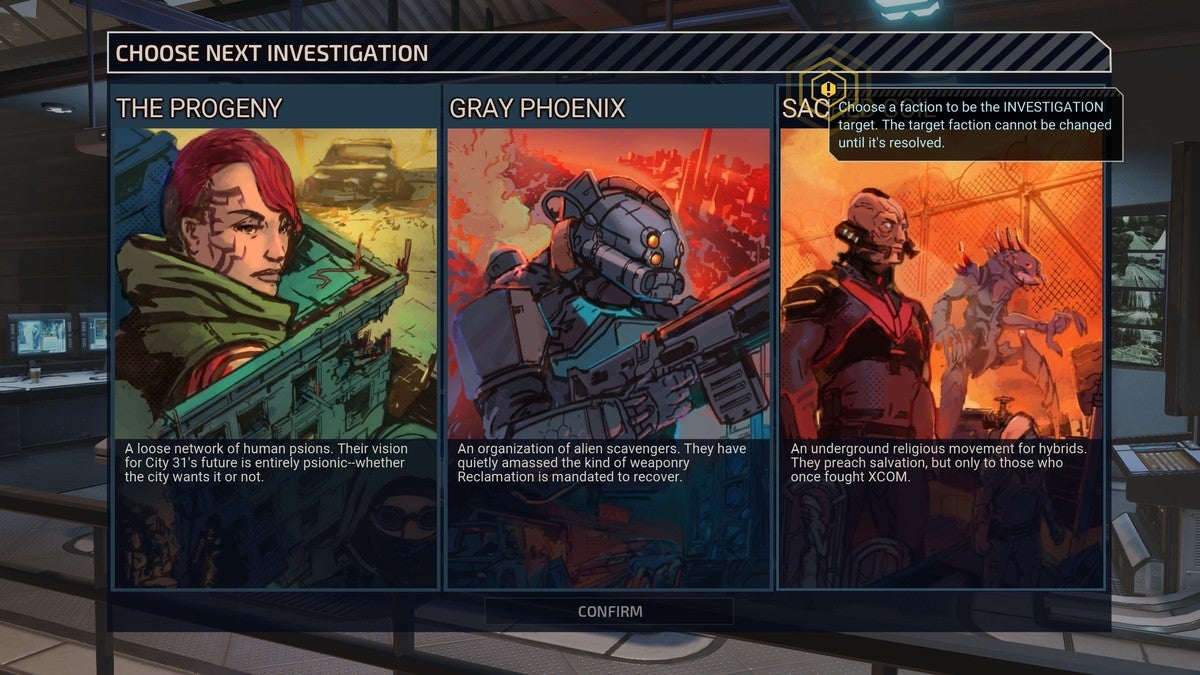
 The impedance factions that Chimera Squad investigates each want to sow in Chaos in Urban center 31 for their own reasons.
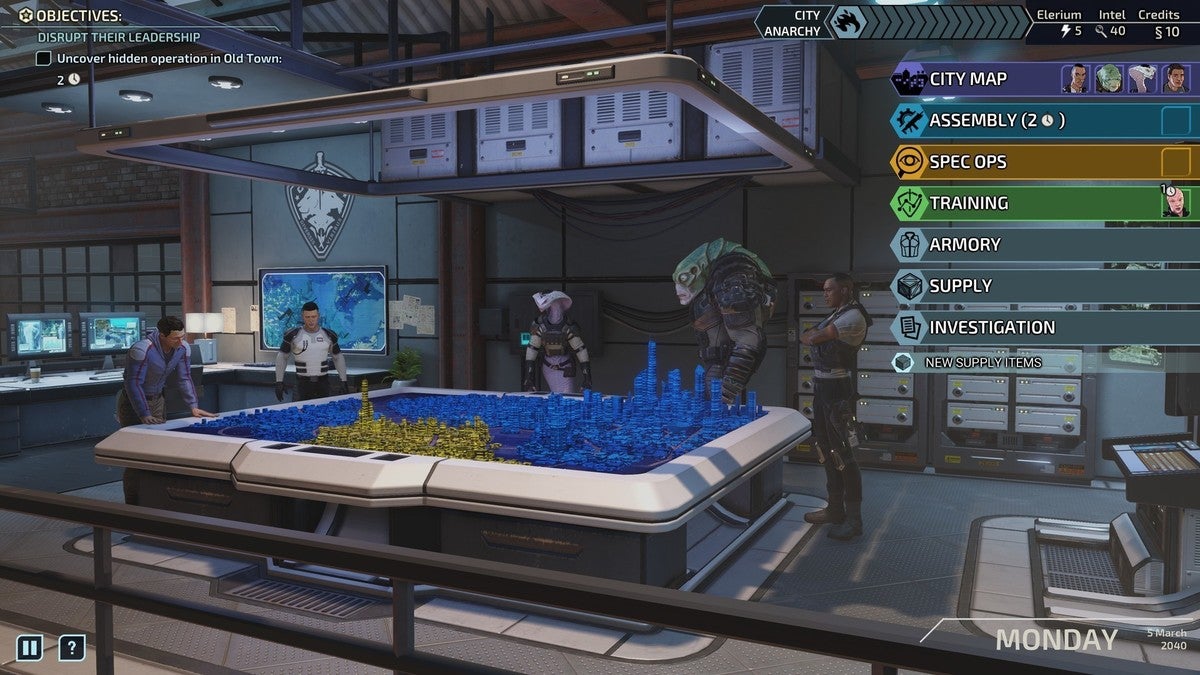
The early XCOM reboots took place connected a global scale, complete with satellite deployments and managing foreign relations. Here, altogether the action takes place in Metropolis 31's cardinal districts. Set in the awaken of the Advent War and the Elders' departure, Metropolis 31 is a turbulent place where humans, aliens, and hybrids viable side-by-side. Non everyone is slaked with the arrangement, to say the least. You need to manage stormy levels of unrest in each district to keep anarchy at bay (hello, reimagined Avatar Project!), and investigate resistance groups trying to overthrow the New Worl ordinate. That's where the titular XCOM: Chimera Squad fits in.
Freshly arrived in City 31, your Chimera Squad consists of several agents, estrange and man alike—and in a stunning departure for the series, they aren't randomly generated characters. You can't customize your soldiers, make combat-tested bonds with your team via acts of against-wholly-odds valour, Oregon delicately tune the capabilities of your warriors to create special, rotating squads equipped to cover different scenarios. Instead, you select from a roster of present XCOM operatives with alone roles rather than the XCOM serial' usual Big Four classes.
 Firaxis
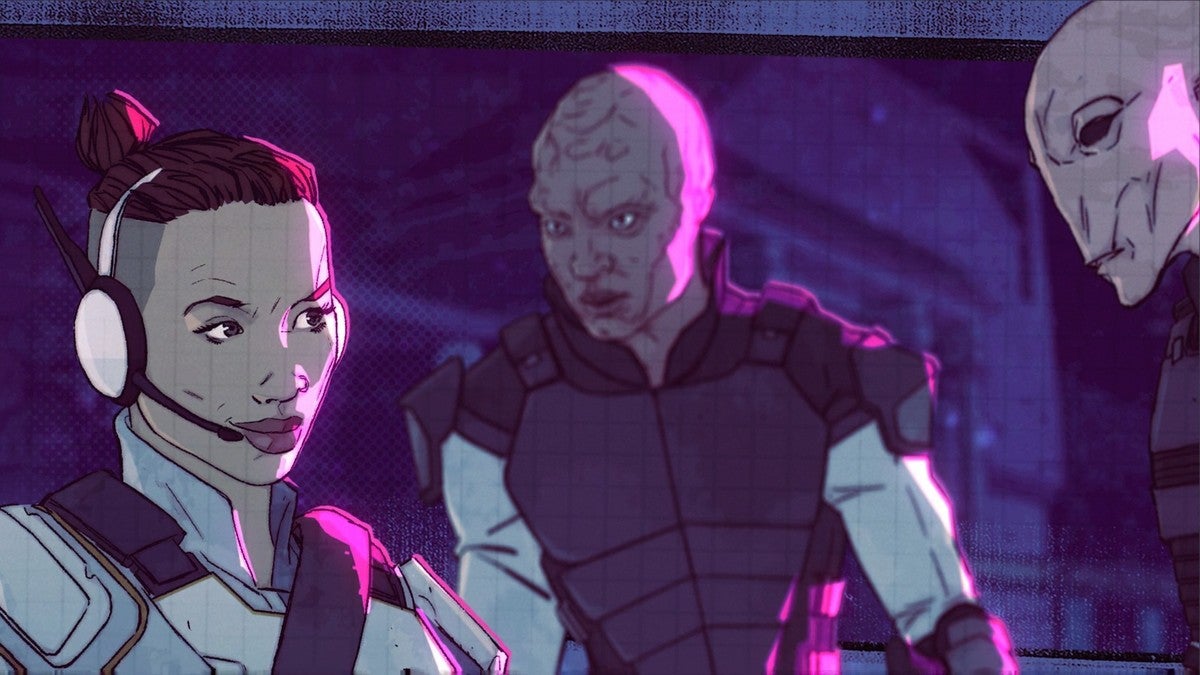
 Terminal the human, Cherub the loanblend, and Wand the former Thin Valet de chambre are all part of Chimera Squad.
Each operative besides packs their personal unique personality. And even though Chimera Squad might non find like your squad, well, information technology still feels like your Chimera Squad. The game leans into bighearted each appendage of the squad their own personality via alive comic Holy Scripture-style cutscenes, fleshed out further via inter-squad chatter throughout missions and while you'rhenium studying the strategic map. The voice acting isn't spectacular, but the actual writing for each character doesn't disappoint. Sometimes, the home base banter hits with surprising pathos.
The addition of fully fleshed-out characters imbues Chimera Squad with personality that XCOM traditionally lacks, and distinct squadmates help oneself reward the tighter, closer feel that the stake strives for. It's you against anarchy with your snitch buddies.
 Firaxis
 Send-building is gone in Chimera Team, and the strategic layer is practically more stripped-cover than inXCOMOregonXCOM 2.
I wouldn't want to lose the feel of hand-tailored squads in the hopefully inevitable XCOM 3, but Chimera Squad's bespoke roles aren't necessarily a bad change—it's just different.
Having established characters requires the end of another XCOM mainstay, however: permadeath. In proper XCOM games, soldiers stay dead when they break. All XCOM veteran can spin around tales about the superior grenadier who sacrificed himself to bring down the hide around a key object glass, or the forest fire fighter that died after trying to punch a Muton happening the face, OR the desperate retreat that degenerated into a full-on squad wipe out. Those moments are what give XCOM life sentence—what turns a handful of randomly generated characters that you gave silly names into your team.
 Firaxis
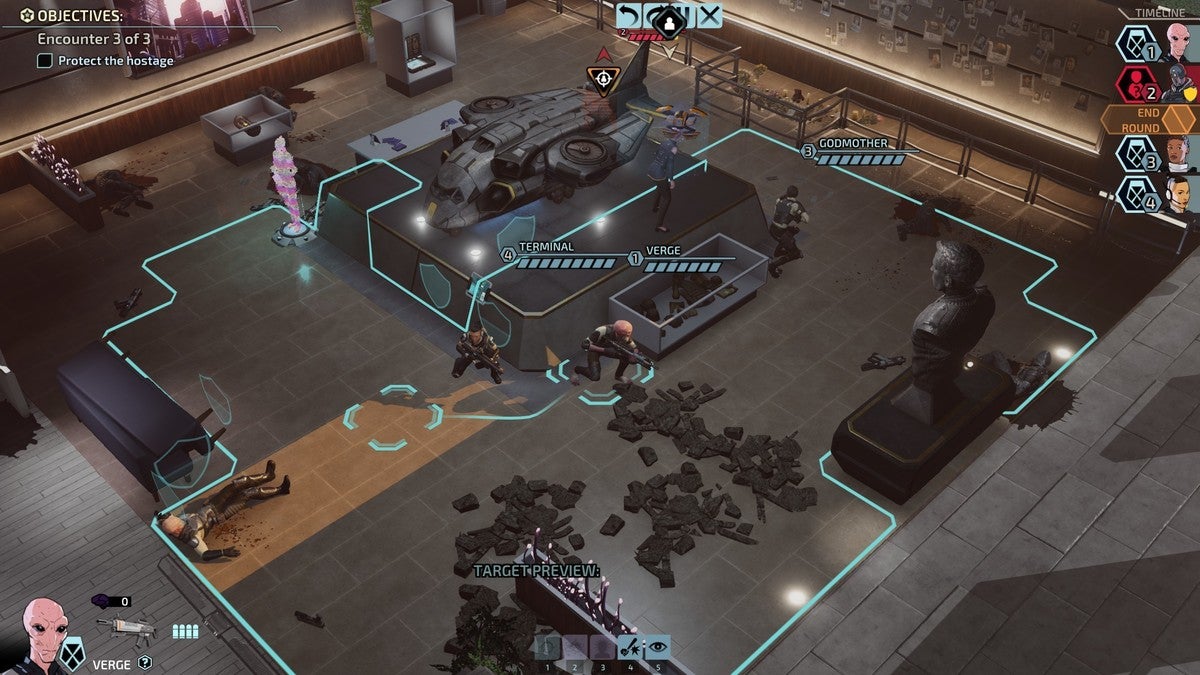
 See Cherub bleeding out on the floor in the get down-left corner? If he doesn't father stabilized, a scar could lower his stats until you invest time in therapeutic it.
That tension's absent from Chimera Team, and I miss information technology. A squad rub here simply forces you to replay the mission (unless you're acting in hardcore fashion) quite than scramble with the loss of dozens of hours of investment into your characters and weapons.
That same, I appreciate the middle ground Chimera Squad treads. If one of your squadmates goes down and you don't manage to stabilize their stipulation mid-mission, there's a chance they'll get a "scar" that impairs them, leading to devastating stat reductions. Those reductions can atomic number 4 removed only by having that broker spend a few days in a preparation facility—essentially learning how to work around a bad shoulder or whatnot. Any damage that your operatives take mid-missionary station will merely be half-healed in the next peerless, too, so you can't just run around guns-blatant without consequence. With a untold more limited roster, that complete matters.
Breach and fire
If we'Re talk about demise, we need to talk about XCOM: Chimera Squad's most group allowance: how it handles the turn-based tactical battles.
In late XCOM games, you moved your uncastrated team, and then all of the aliens took their turns. The team up-based turns let you set up elaborate traps Beaver State scrunch up down in the face of an anticipated foreigner onset—adhesive, comprehesive tactics for your integral group.
 Firaxis
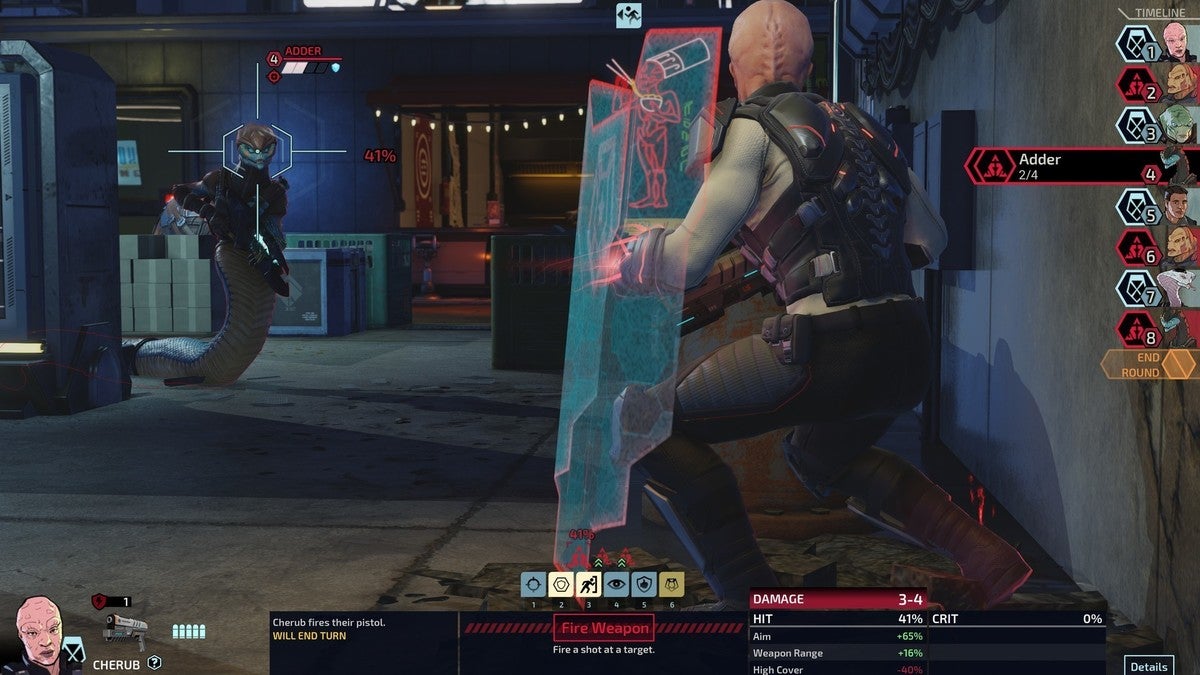
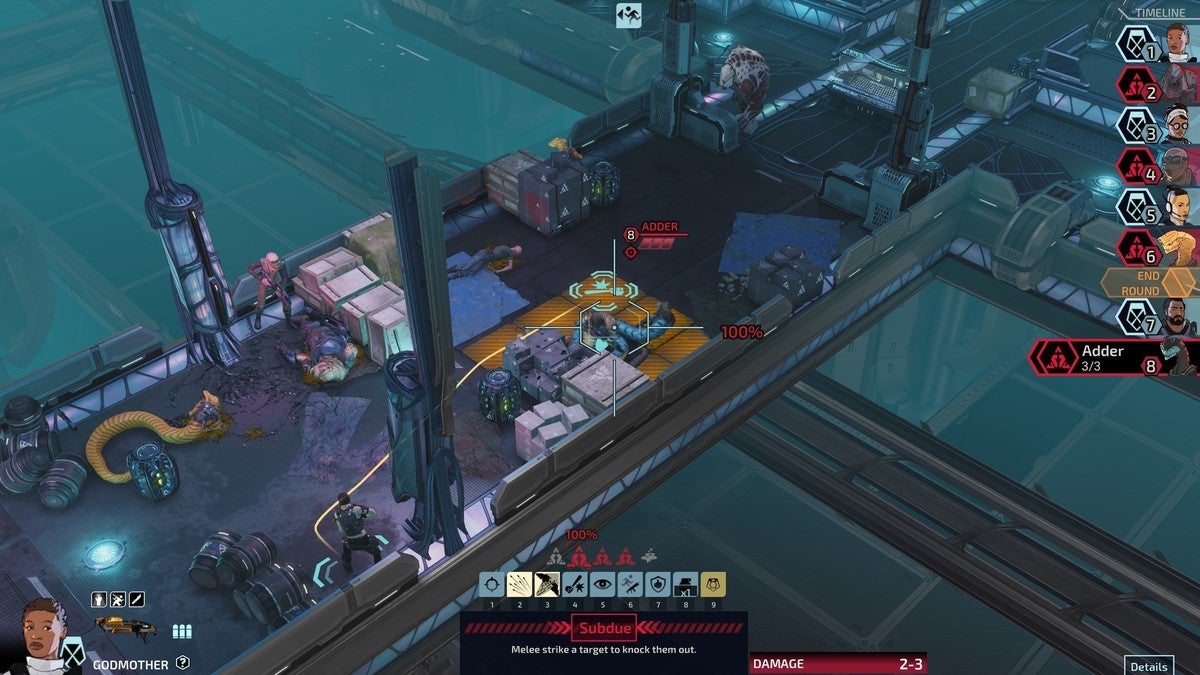
 Chimera Team switches to a Dungeons & Dragons-fashio interleaved turn parliamentary procedure instead, with XCOM operatives and opposing forces moving individually instead of in groups each round. Some enemies will equal able to act before certain members of Chimaera Squad, with the turn order pictured in a timeline connected the edge in of the CRT screen (shown in the screenshot above). Rather than having your whole squad focus on a single cloudy opposition during a group turn, you now need to deal which units move when, and prioritize your movements and actions accordingly.
Interleaved turns wouldn't put to work in a proper XCOM lame. If XCOM 3 happens, I hope it returns to group-based tactics. Merely information technology works in Chimera Squad, because the entire spunky's been constructed more or less the idea.
 Firaxis
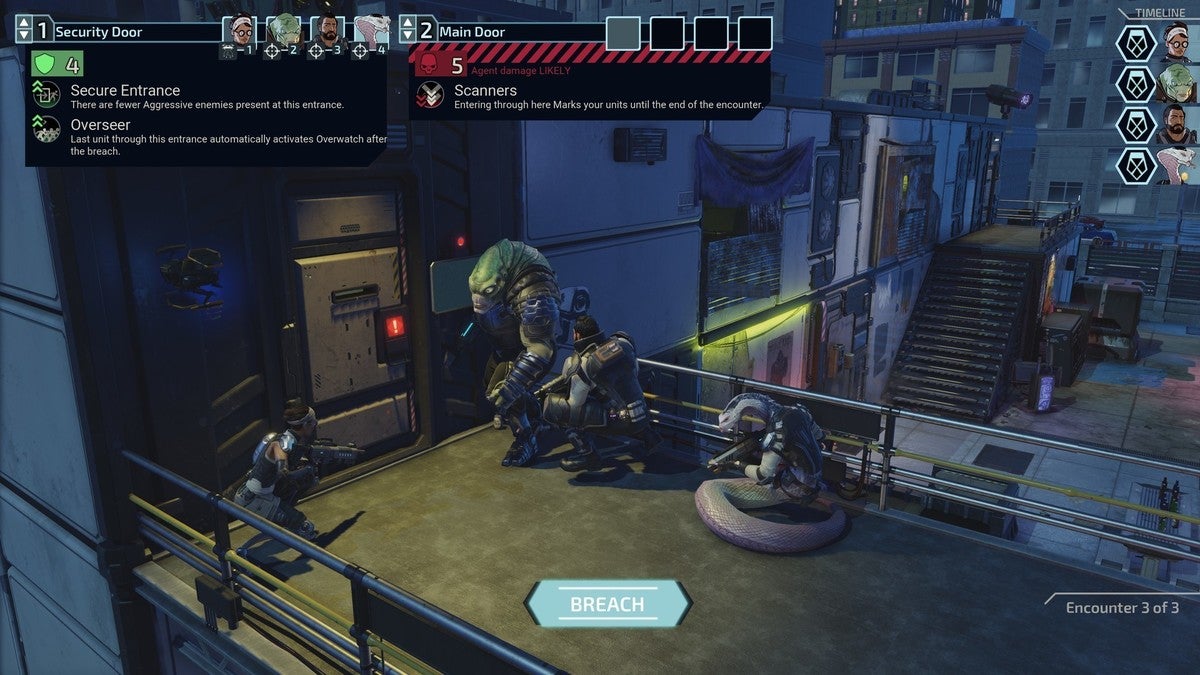
 As anti to the wide-receptive maps in the main XCOM entries, Chimera Squad's missions essentially consist of several smaller, much closer-quarters spaces. Each conflict begins with a "Breach" phase, where you'll divide your squad of iv chosen agents among various doors, windows, and air vents—some entries require specific characters equipped with specific equipment—past burst into the board in a melodramatic fashion. Certain entrance points include various combat modifiers, such as increased accuracy or, on the flip side, greater odds that you'll absorb fire in generate.
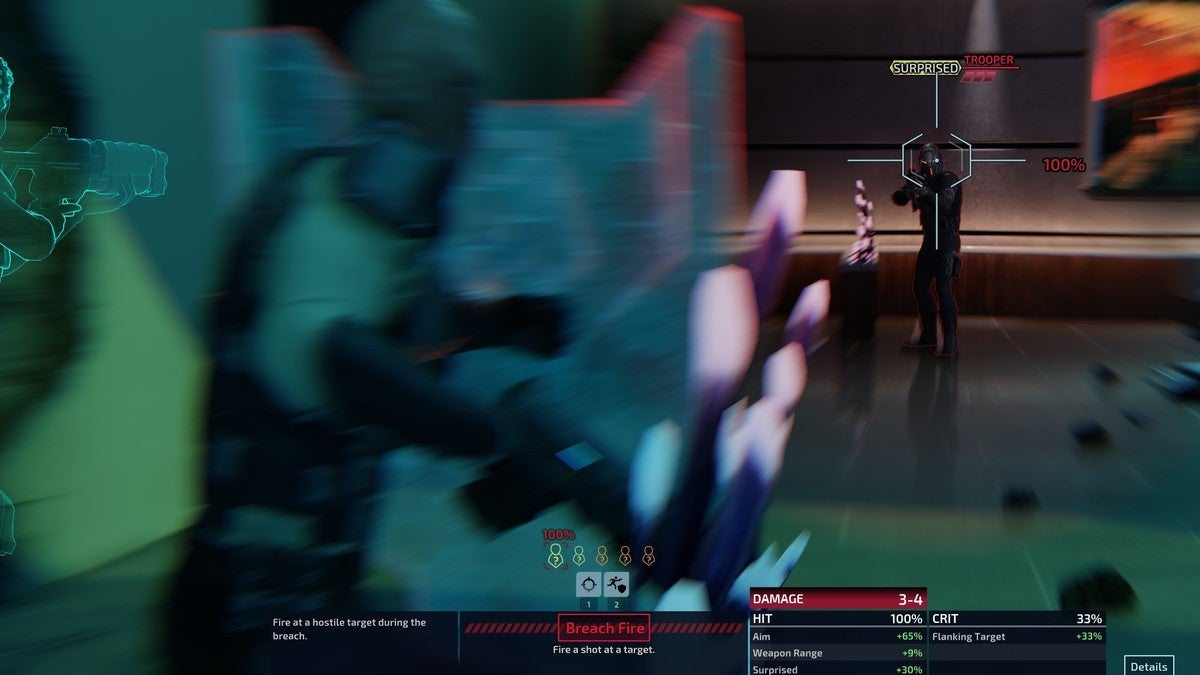
Click the Breach button, and your squad all rushes in at formerly, liberal you the overleap (and a free action) on the bad guys. Time slows to a crawl, the blind blurs, and the camera plunks itself down down the shoulder of your first operative, who put up take an action ahead it moves behind the shoulder of your following broker, and so on. IT feels nifty, and it's wonderfully medium.
 Firaxis
 The blurry, drunk camera of Breach mode reinforces the flavour of rushed action, but prevents you from seeing the wider surroundings.
The initial rupture is also tactically important. While some enemies bequeath be taken by surprisal and thus be much easier to hit, different enemies won't personify. Ones that are aggressive—marked by a red icon in your visible opposition list—will even take return arouse at your team after your stop your released violate actions. That means you might want to let less-aware, easily slay enemies live for now to focus your your squad on aggressive or especially treacherous foes first.
Characters also have other abilities they can use alternatively of release during a breach. Cherub, a relentlessly cheerful not-indoctrinated hybrid, packs a particularly useful one that tells him to scrunch with his shield, which harmlessly draws fire from alert enemies. Information technology's great if you ascertain yourself in a hairy breaching situation.
 Firaxis
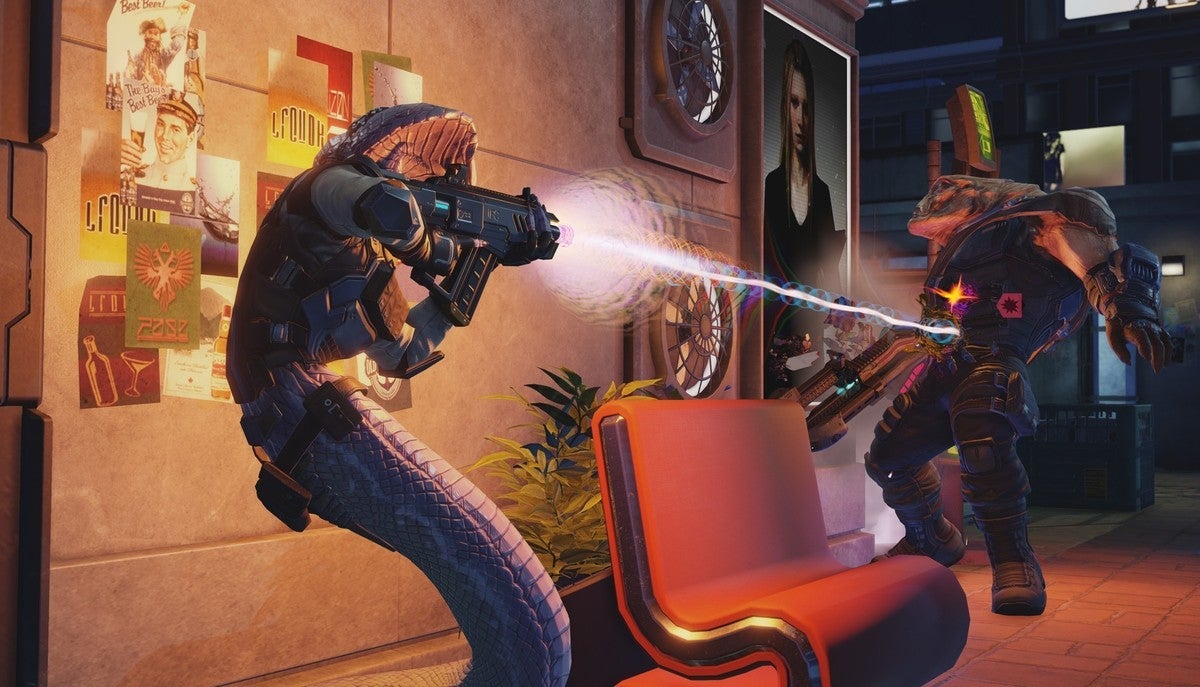
 After the breach phase ends, any remaining alert enemies fire connected your squad, XCOM scrambles to cover, and the proper plan of action battle begins. The tighter rooms mean you generally have a higher chance to hit than in other XCOM games, which helps make the interleaved turns feel to a greater extent manageable.
The various team members apiece get unique abilities they can use on their turns, and more of them work asymptomatic in combining with specific abilities from specific squadmates, which makes turn on management even more crucial. How you position your squad during the breaching phase affects turn order, while certain special abilities also grant spear carrier moves. Formerly per mission—not per room or turn—your team can activate "Team Upbound" to give a Chosen ally the next turn. IT can be a godsend when RNGsus frowns upon you, so don't blow it early.
 Firaxis
 Combat in Chimaera Squad feels much faster, much much fluid, and much more chaoticthan in other XCOM games, while still scratching that plan of action process itch the series is famous for. Again: It's good—identical close—just different. And it's an absolute blast to be capable to use disaffect abilities finally, after falling target to them for so damned long.
The individual tweaks essentially repose on another standard XCOM element to rest, however. Between the interleaved turns and character-specific abilities, the legendary Overwatch feels much, some to a lesser extent functional in Chimera Squad. You'Ra near e'er fortunate taking a shot, deploying an action, or defensively exploitation Preparation (Chimera Squad's Hunker Down equivalent) than relying happening Overwatch's reactive capabilities—a lesson I learned the hard way in the game's ahead of time missions. Afterward hundreds of hours playing mainstream XCOM games, clicking Overwatch is motor memory.
Bottom line
As a far-time serial publication veteran, I was skeptical coming into XCOM: Chimera Squad. Yes, I was excited for another gamble at XCOM, but the departures seemed too radical on paper. Now that I've played it, I'm in love with the streamlined experience it offers.
 Firaxis
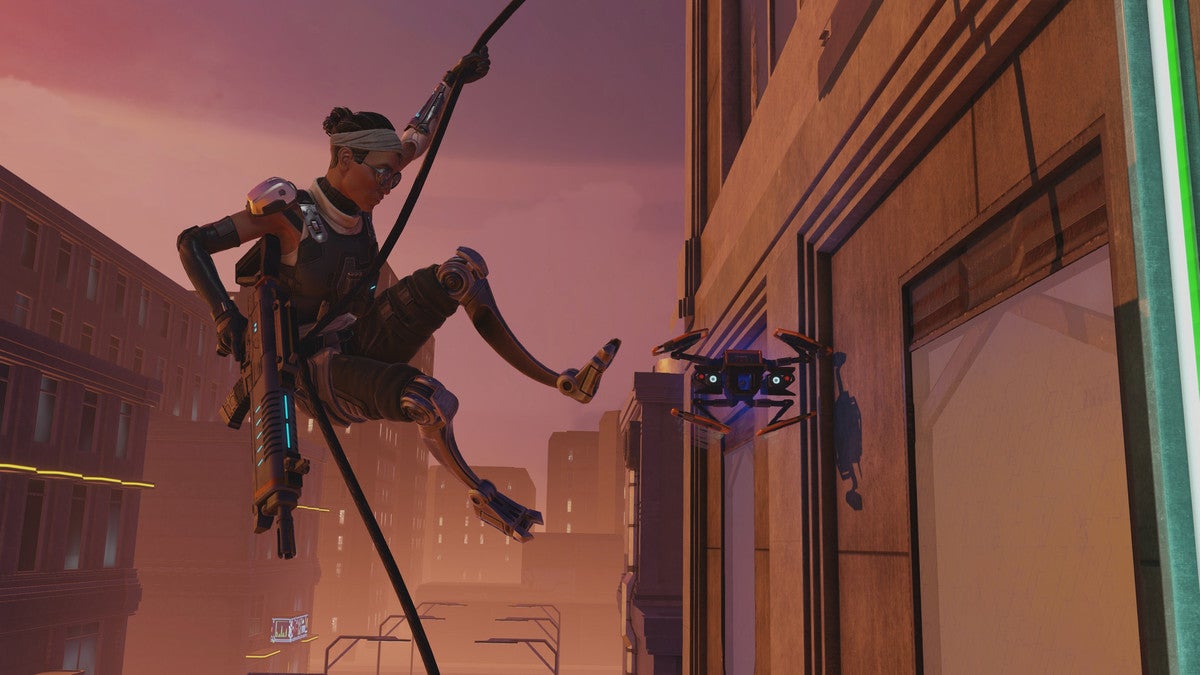
 Every element of the gamey has been attuned to make it feel like being a cop in an alien city, from the established squadmates to the smaller maps to the interleaved turns and the oh-so-cinematic Breach mode. You can even play Chimera Squad not-lethally, choosing to subdue opponents instead of slaughtering them. Doing so even grants you valuable Intel resources to assistant connected the wider strategic level. You know, because you commode't interview corpses.
If Chimera Squad wereXCOM 3, I wouldn't like it. Eastern Samoa a tailspin-off, it shines, implementing bold, clever changes that arrive at the game its own uniquely beguiling thing rather than antitrust another XCOM rehash—piece static somehow managing to keep that toothsome XCOM vibe throughout. Fingers crossed we'll regard more experiments like this in the next, construction on the XCOM brand in ways that pee much more sense than the disastrous The Bureau: XCOM Declassified did.
 Firaxis
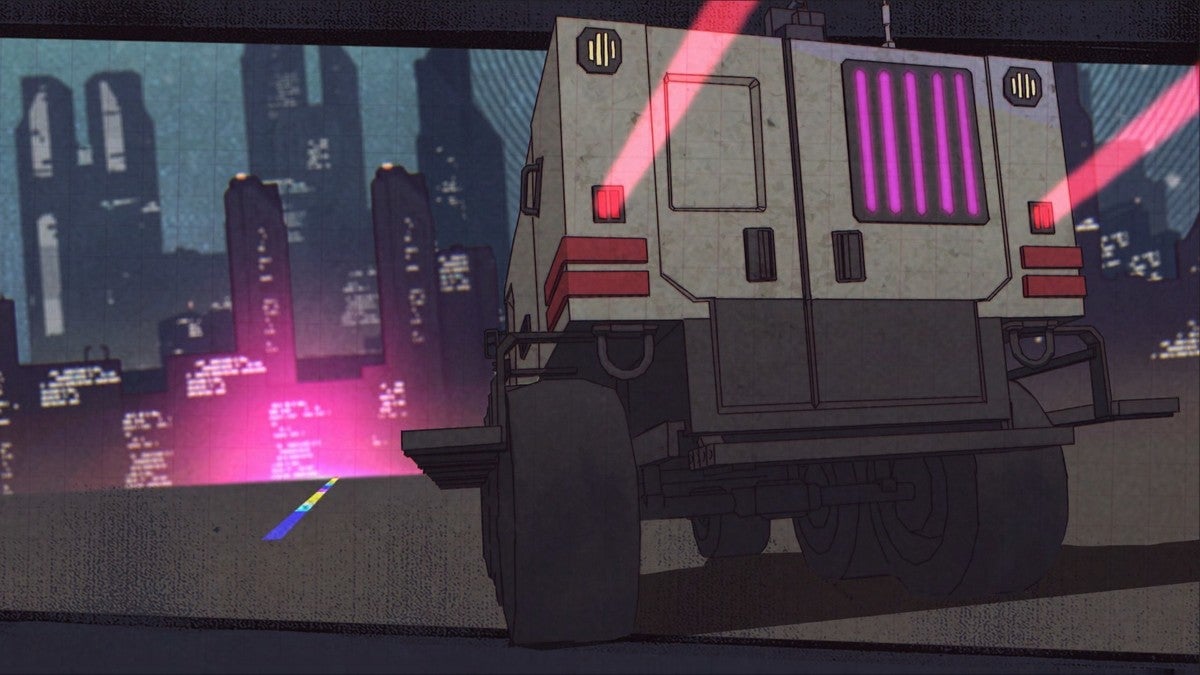
 The ATC, shown here rolling into City 31 during an animated cuscene, replaces XCOM's Skyranger in Chimera Squad.
I also couldn't commend the game at $60—butXCOM: Chimera Squad costs just $20, or a mere $10 if you buy information technology ahead Crataegus laevigata 1 (possibly to succus sales before Microsoft's XCOM-like Gears Tactics launches following week). Information technology's an out-and-out steal at that price. There's a surprising amount of game here—about 20 hours per safari, though I still haven't beat it—and Firaxis bolsteredChimera Squad with fully-breathless mod support on Steam, just equivalent information technology did withXCOM 2. That game's mods have donated it legs long after it should feel stale, with some of their ideas plane making information technology into XCOM 2's Warfare of the Chosen expansion. Heck, the legendary Long War stylish's 45-degree camera turns even made information technology into Chimera Squad. With luck, we'll keep having fresh community-made XCOM goodness for long time to descend.
Bottom billet: Purchase XCOM: Chimera Team, even if the revolutionary changes sound weird to you. It's nonXCOM 3, and it's not perfect, butChimaera Squad still kicks roll in the hay in its personal way, and it's priced to act up.

Source: https://www.pcworld.com/article/399070/xcom-meets-swat-chimera-squads-radical-tweaks-make-for-a-refreshing-spinoff.html
Posted by: fuentesvill1978.blogspot.com
0 Response to "XCOM meets SWAT: Chimera Squad’s radical tweaks make for a refreshing spinoff - fuentesvill1978"
Post a Comment